- Home /
- About Us
About
Since 2010, LITA Safety has focused on manufacturing reliable safety gloves for professional and industrial applications. From our manufacturing base in Nantong, Jiangsu Province, China, we combine production expertise, quality control, product development, and international supply capabilities to serve customers worldwide.
Professional Safety Glove Manufacturer Since 2010
LITA Safety Group is a professional manufacturer and global supplier of industrial safety gloves and hand protection solutions.
Our manufacturing base is located in Nantong, Jiangsu Province, China, one of the world's major safety glove manufacturing centers. Since establishing our first glove dipping production line in 2010, we have continuously developed our capabilities in glove design, knitting, coating, quality control, and product development.
We are committed to four principles:

Quality

Reliability

Innovation

Partnership
Our goal is simple: to provide reliable hand protection products and long-term supply solutions that help our customers grow in their markets.
Our product range includes nitrile coated gloves, latex coated gloves, PU coated gloves, cut resistant gloves, assembly gloves, chemical protection gloves, and other specialized work gloves.
Today, LITA Safety serves distributors, wholesalers, retailers, and industrial customers across Europe, North America, South America, the Middle East, and Asia-Pacific.
Safety Gloves Production
Reliable hand protection starts with controlled manufacturing.
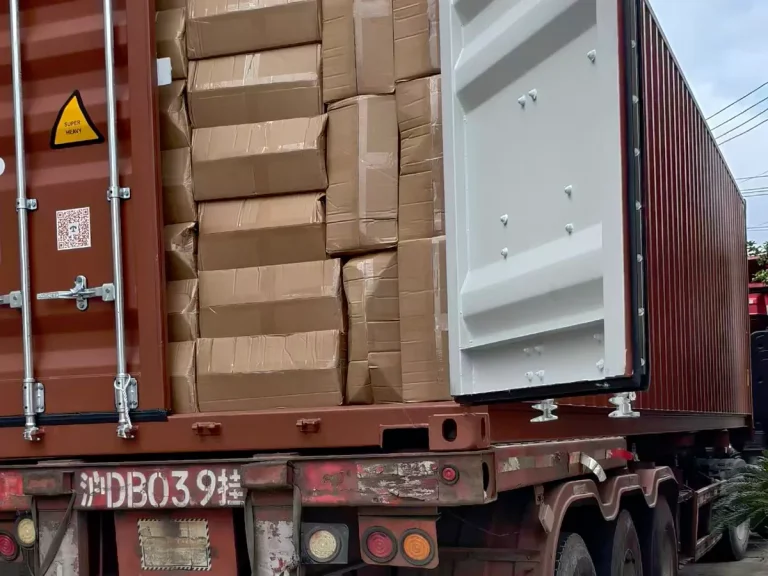
At our Nantong production facility, LITA Safety manages the key stages of safety glove production, from raw material preparation and liner knitting to coating, inspection, packing, and shipment.
Our core manufacturing process includes:
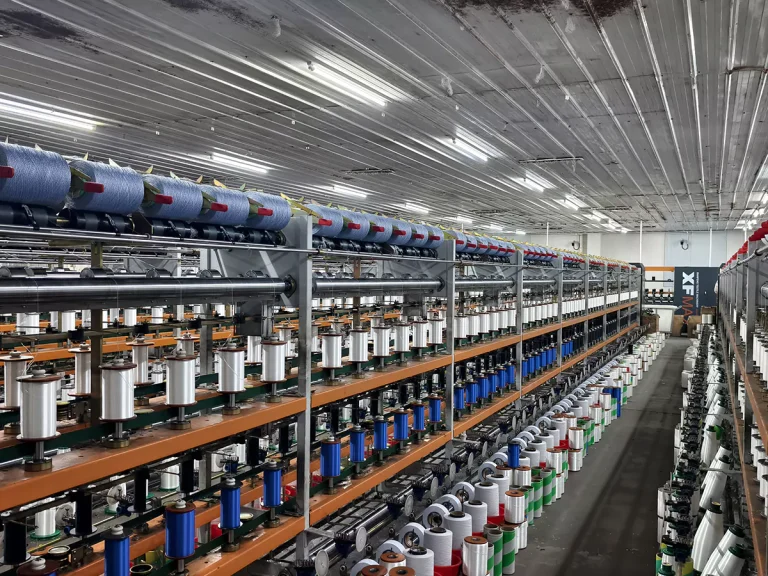
Yarns are evenly wound and prepared according to production requirements, helping maintain consistent tension and stable yarn feeding for the knitting process.
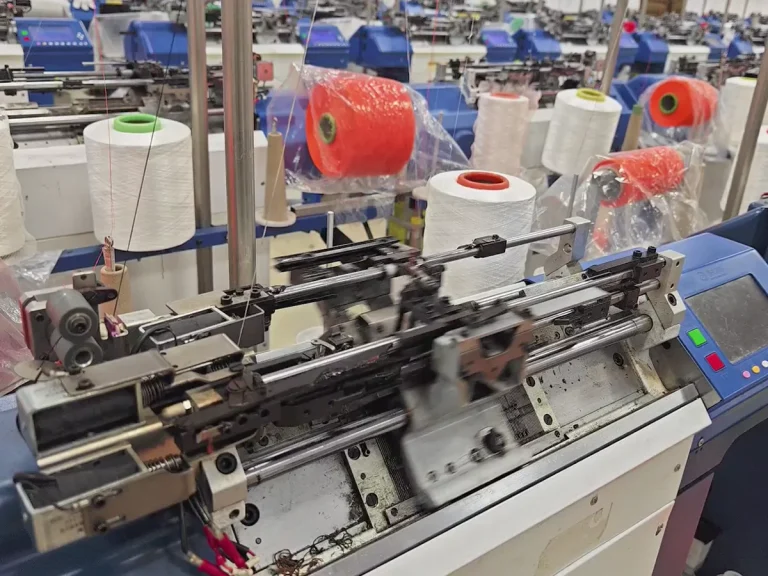
Prepared yarns are knitted into seamless glove liners using automated knitting machines. Different yarns and knitting gauges can be selected according to the required fit, flexibility, comfort, and protection level.
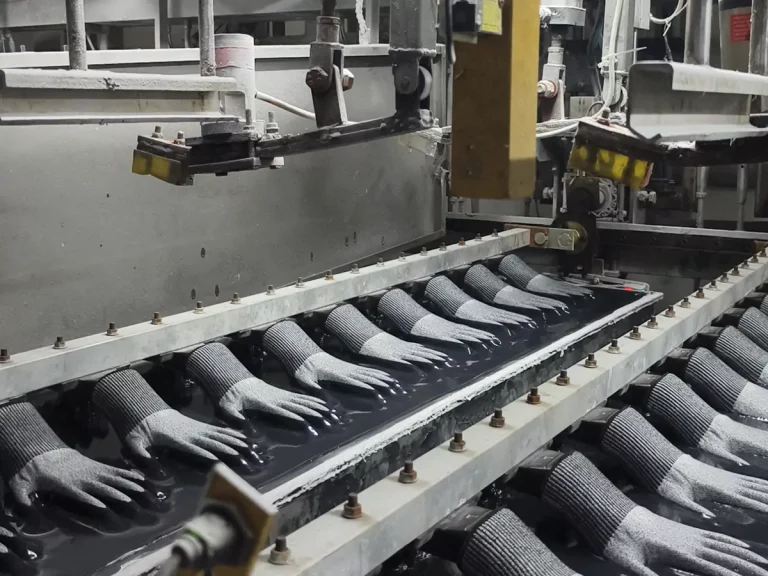
Knitted glove liners are dipped and coated with materials such as nitrile, latex, PU, micro-foam nitrile, or sandy nitrile. Different coating materials and finishes are applied according to the required grip, abrasion resistance, flexibility, and working environment.
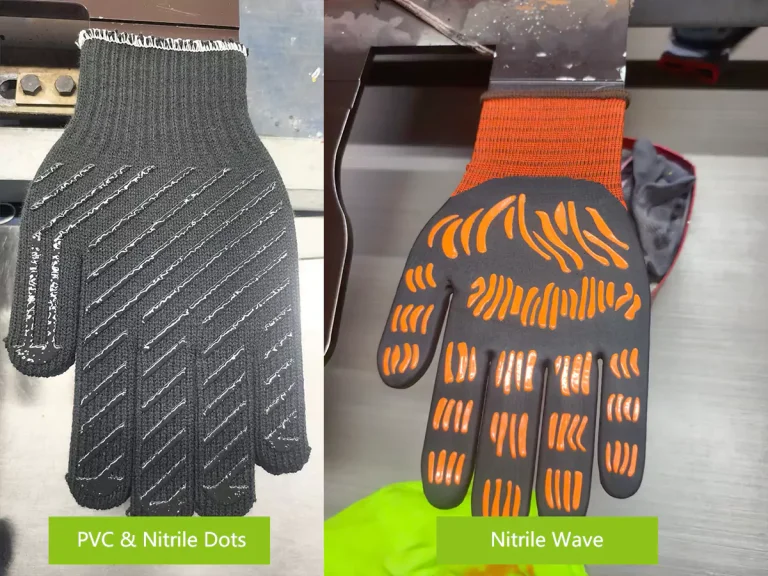
Depending on the glove design and application, additional grip patterns can be applied after dipping to improve grip performance and durability.
PVC & Nitrile Dots
PVC or nitrile dots can be added for enhanced grip. PVC dots are typically applied directly to the knitted liner, while nitrile dots are applied over nitrile-coated surfaces for better material compatibility and adhesion.
Nitrile Wave
Nitrile wave patterns can be applied to create a textured gripping surface, providing additional grip while maintaining flexibility for demanding work applications.
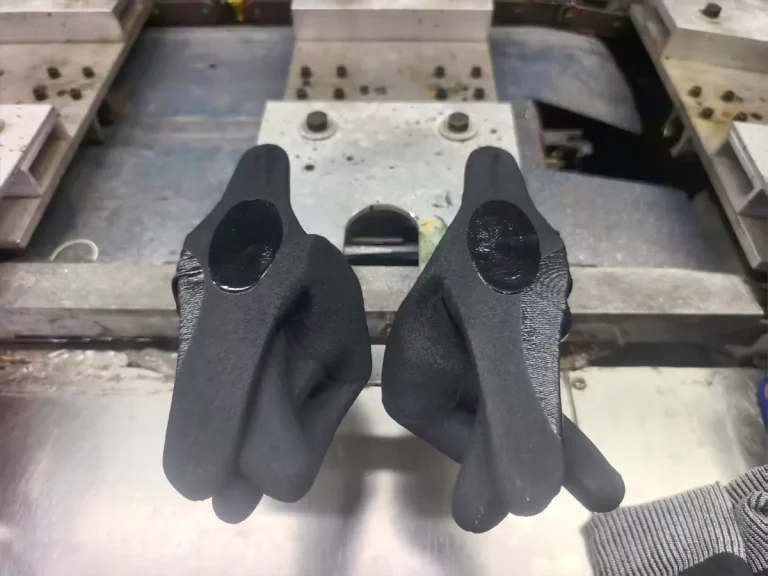
Reinforcement is applied to the high-wear thumb crotch area to improve abrasion resistance and durability, helping extend the glove’s service life.
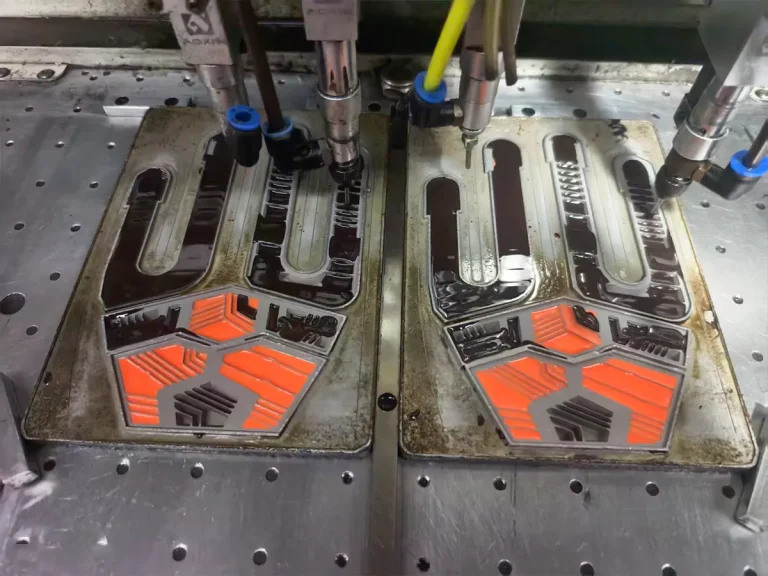
TPR impact-protection components are molded into the required shapes and patterns before being attached to the glove.
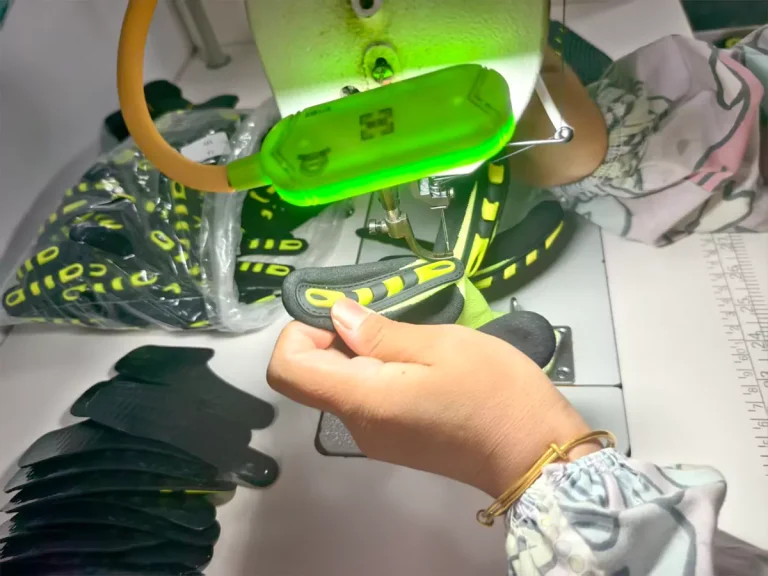
For impact-resistant gloves, molded TPR components are carefully positioned and sewn onto the back of the glove to create secure impact-protection zones.
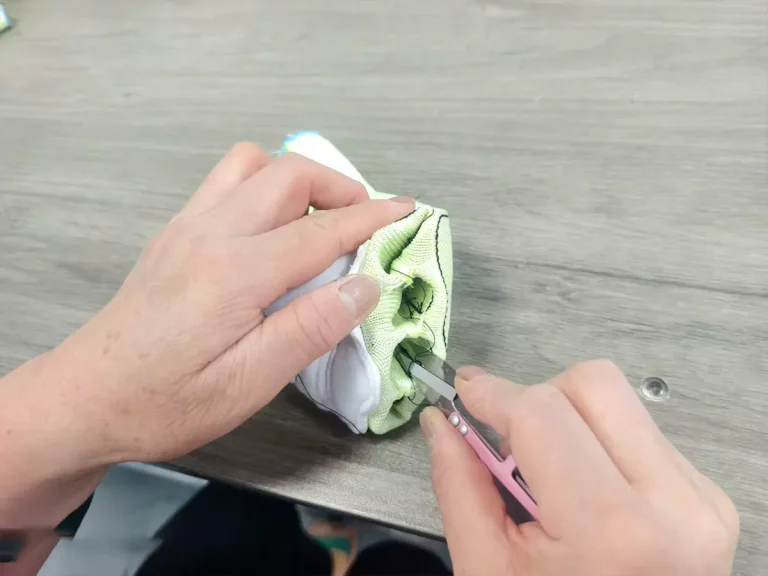
Excess threads are carefully trimmed after sewing to keep each glove clean and neat. This step helps ensure comfortable wear and prepares the gloves for final quality inspection.
After all required secondary processes are completed, the gloves are inspected for workmanship, component attachment, stitching, appearance, and overall consistency before packing.
Testing Equipment
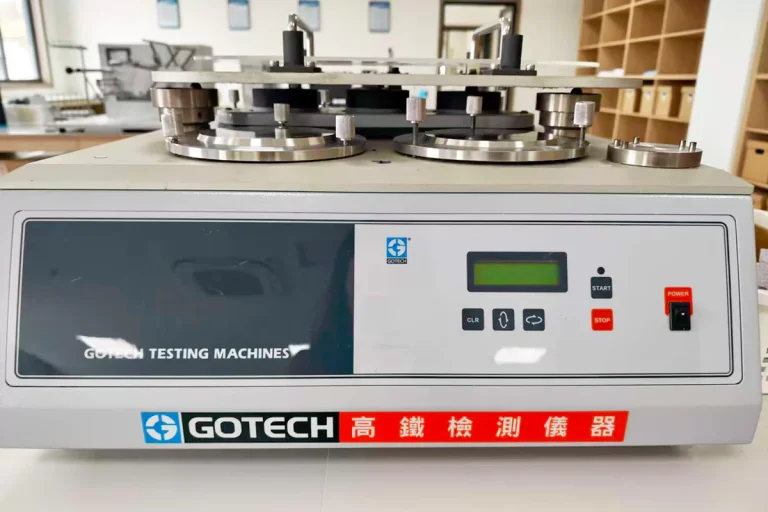
Used to evaluate the abrasion resistance of glove materials under repeated rubbing, helping assess material durability and wear performance.
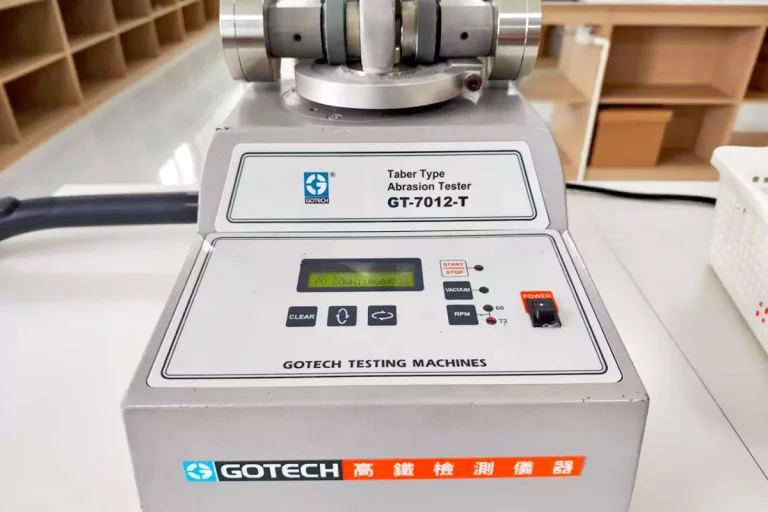
Used to test the resistance of glove materials and coatings to surface abrasion under controlled testing conditions.
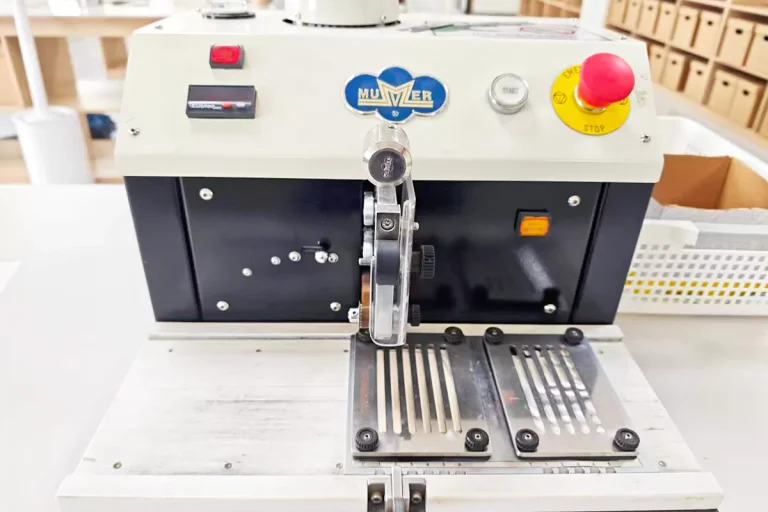
Used to evaluate the cut resistance of protective glove materials using a rotating circular blade.
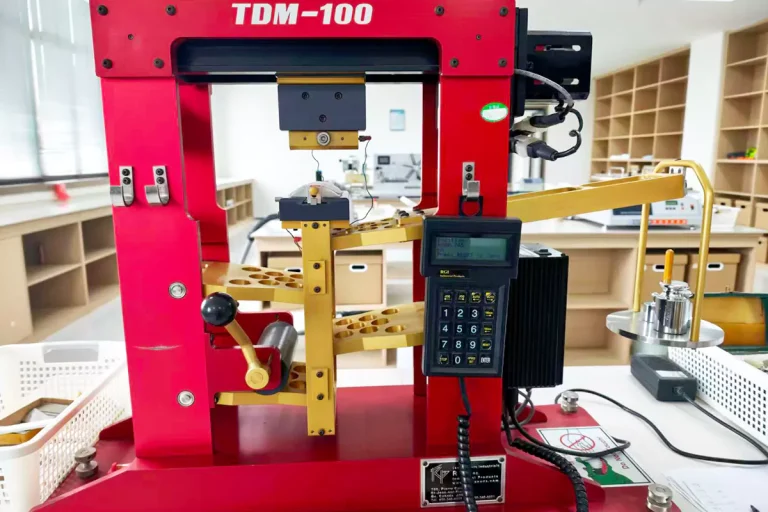
Used to measure cut resistance by moving a straight blade across the test material under controlled loads, commonly used for cut-resistant glove evaluation.
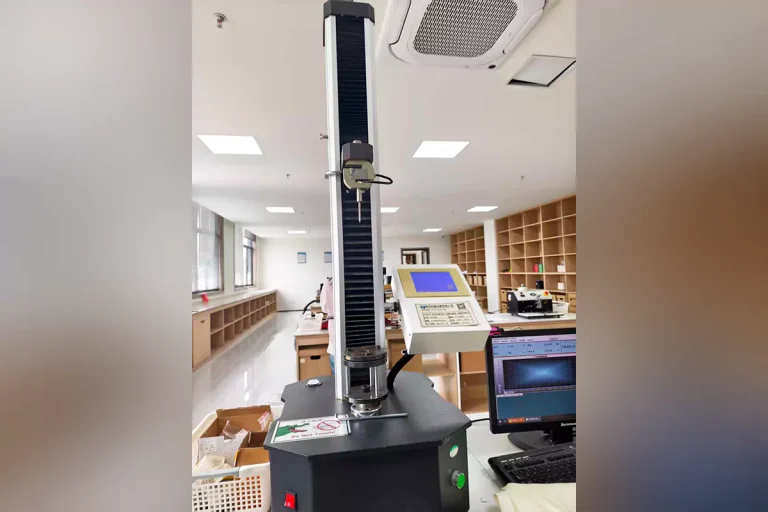
Used to evaluate the resistance of glove materials to penetration or puncture, helping verify protection against sharp-point contact.
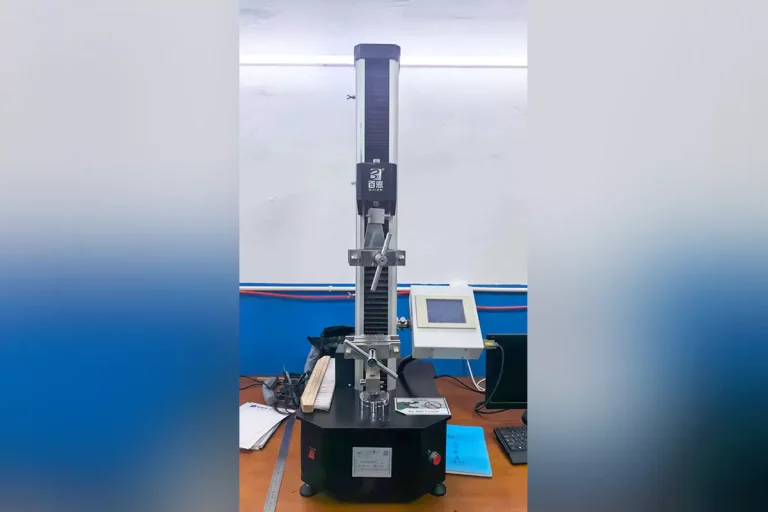
Used to measure the force required to tear glove materials, helping evaluate material strength and durability.
Test Reports
For professional safety products, performance claims need to be supported by appropriate testing and documentation.
LITA Safety supplies safety gloves developed for international markets and applicable protective glove requirements. Our product portfolio includes gloves tested or certified according to relevant standards and requirements, including EN 388 and other applicable regulations depending on product type and market.
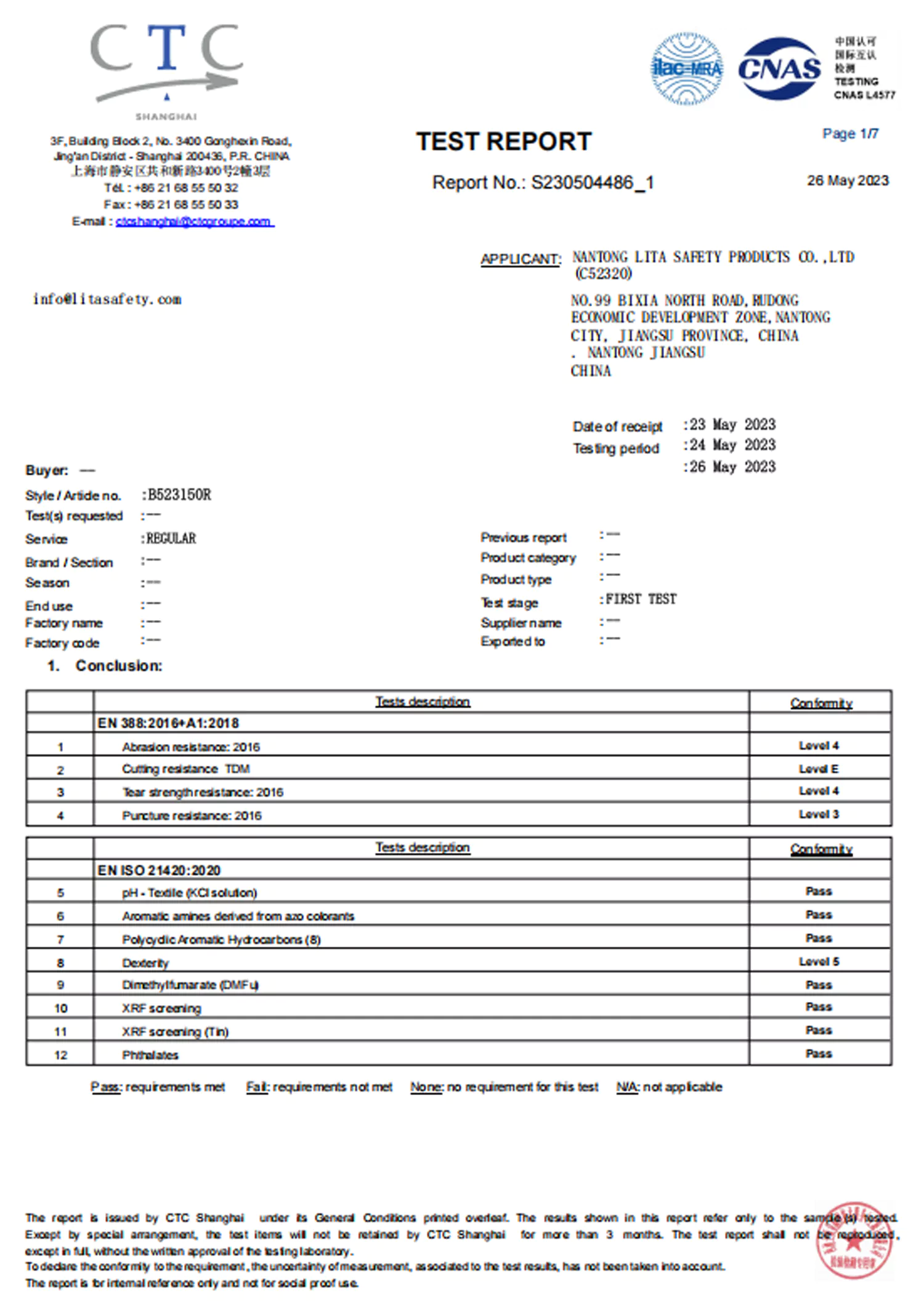
This CTC test report covers LITA Safety glove model B523150R, tested according to EN 388:2016+A1:2018 and EN ISO 21420:2020. The tested sample achieved Level 4 abrasion resistance, Level E TDM cut resistance, Level 4 tear resistance, Level 3 puncture resistance, and Level 5 dexterity.
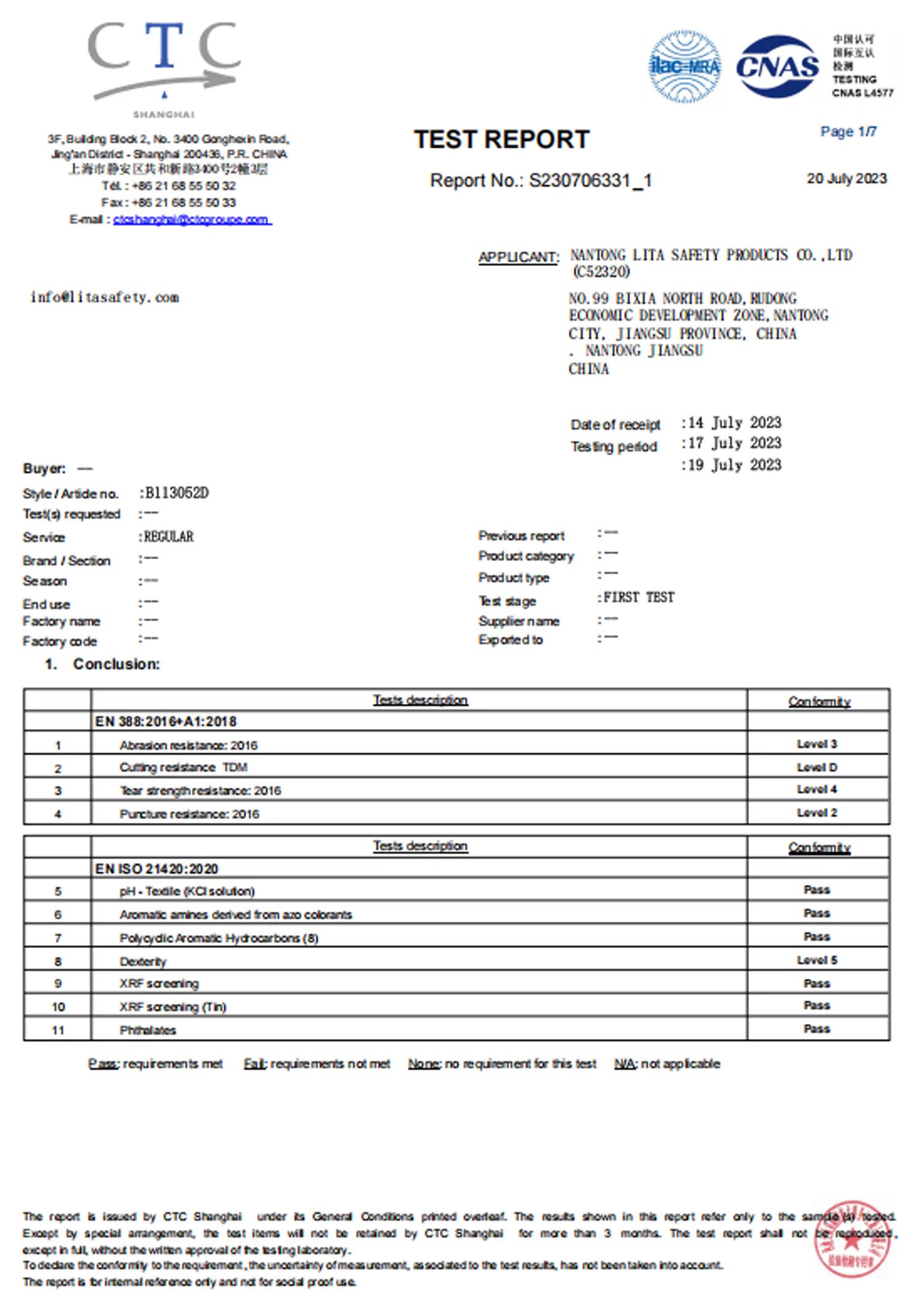
This report presents third-party testing results for LITA Safety glove model B113052D. Under EN 388:2016+A1:2018, the tested sample achieved Level 3 abrasion resistance, Level D TDM cut resistance, Level 4 tear resistance, and Level 2 puncture resistance, together with Level 5 dexterity under EN ISO 21420:2020.
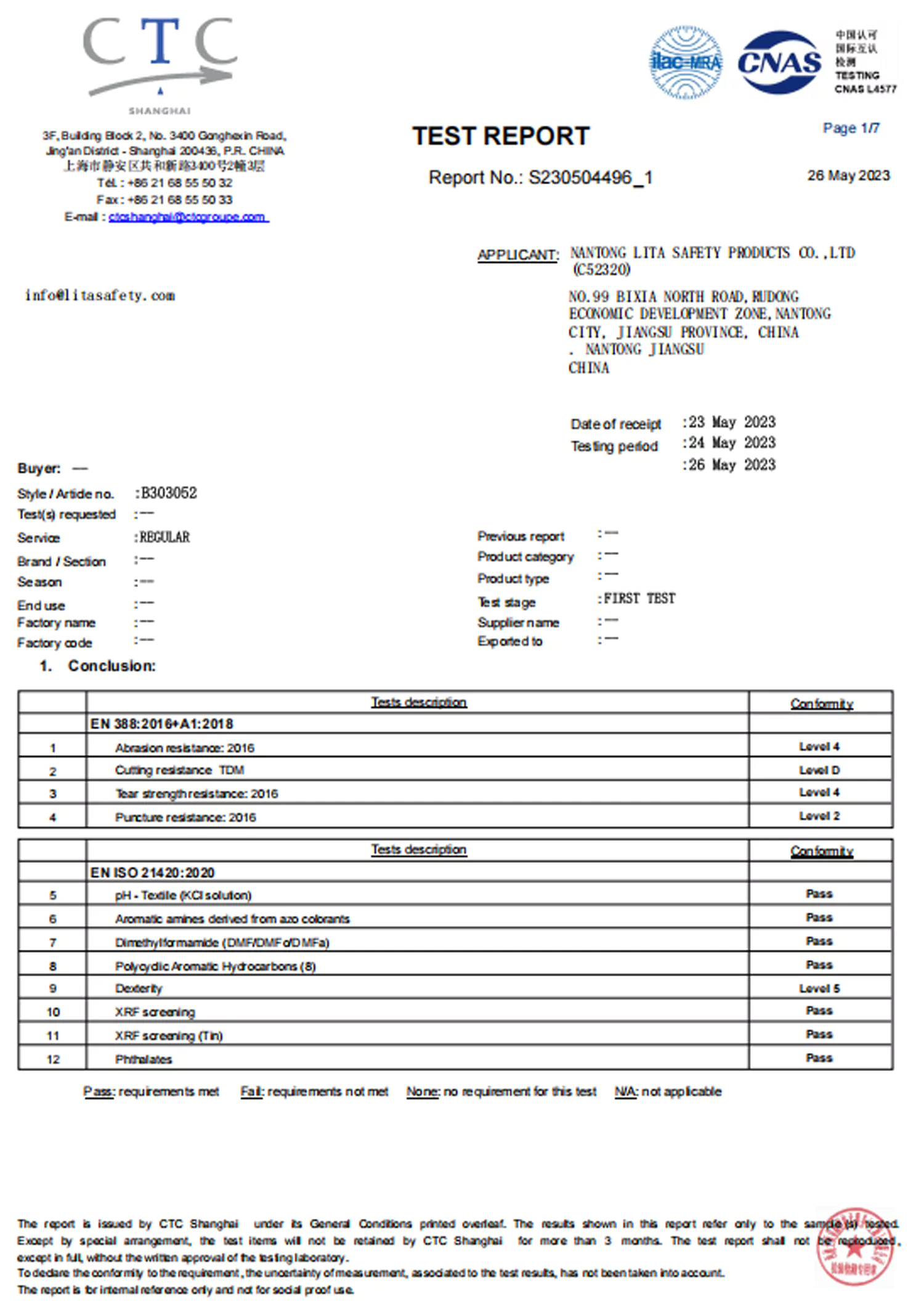
This test report covers LITA Safety glove model B303052, featuring a PU-coated high-performance fiber liner. The tested sample achieved Level 4 abrasion resistance, Level D TDM cut resistance, Level 4 tear resistance, Level 2 puncture resistance, and Level 5 dexterity.
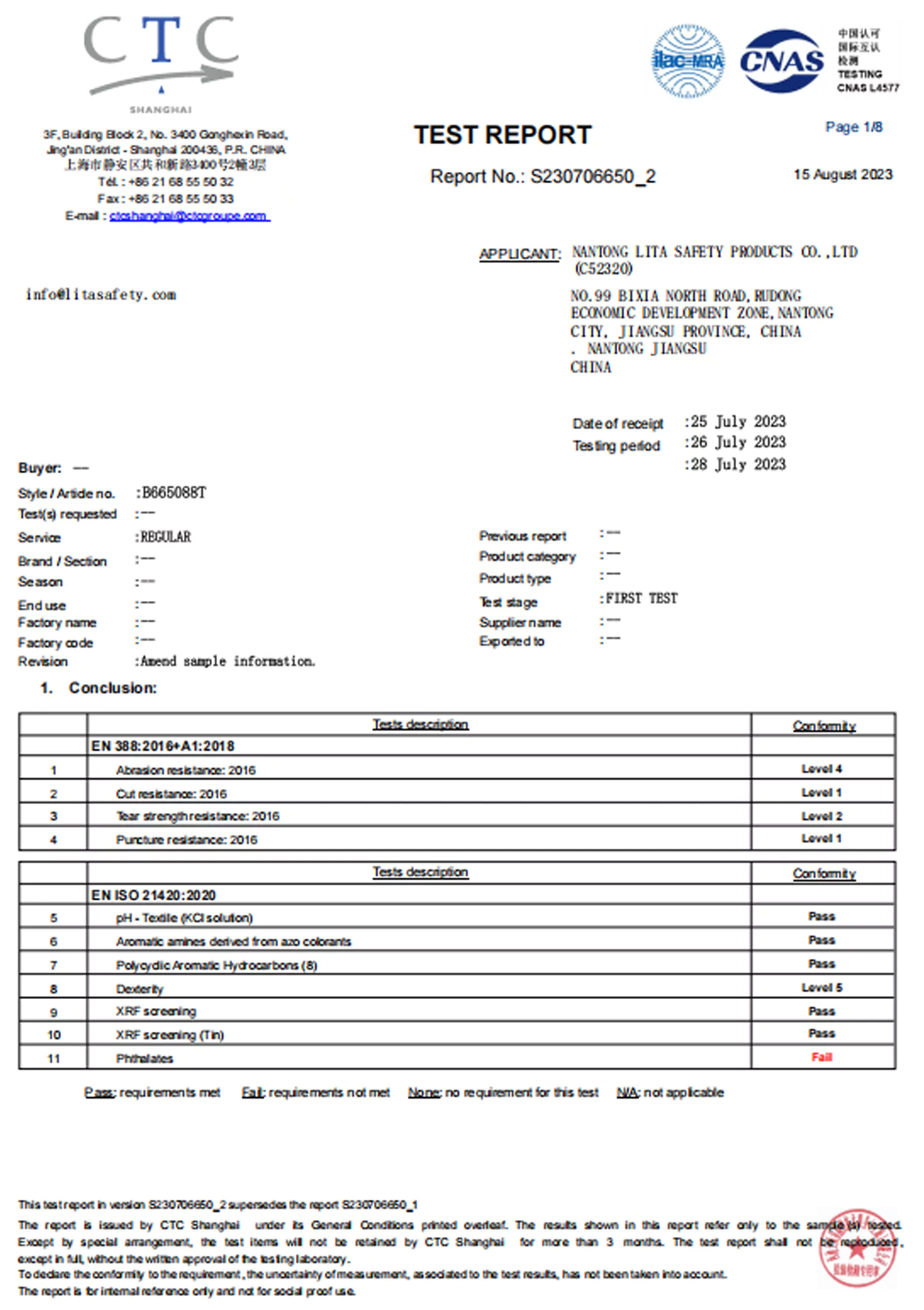
This CTC report covers LITA Safety glove model B665088T, a nitrile-coated nylon/spandex glove. Testing included mechanical performance under EN 388:2016+A1:2018 and general glove requirements under EN ISO 21420:2020.
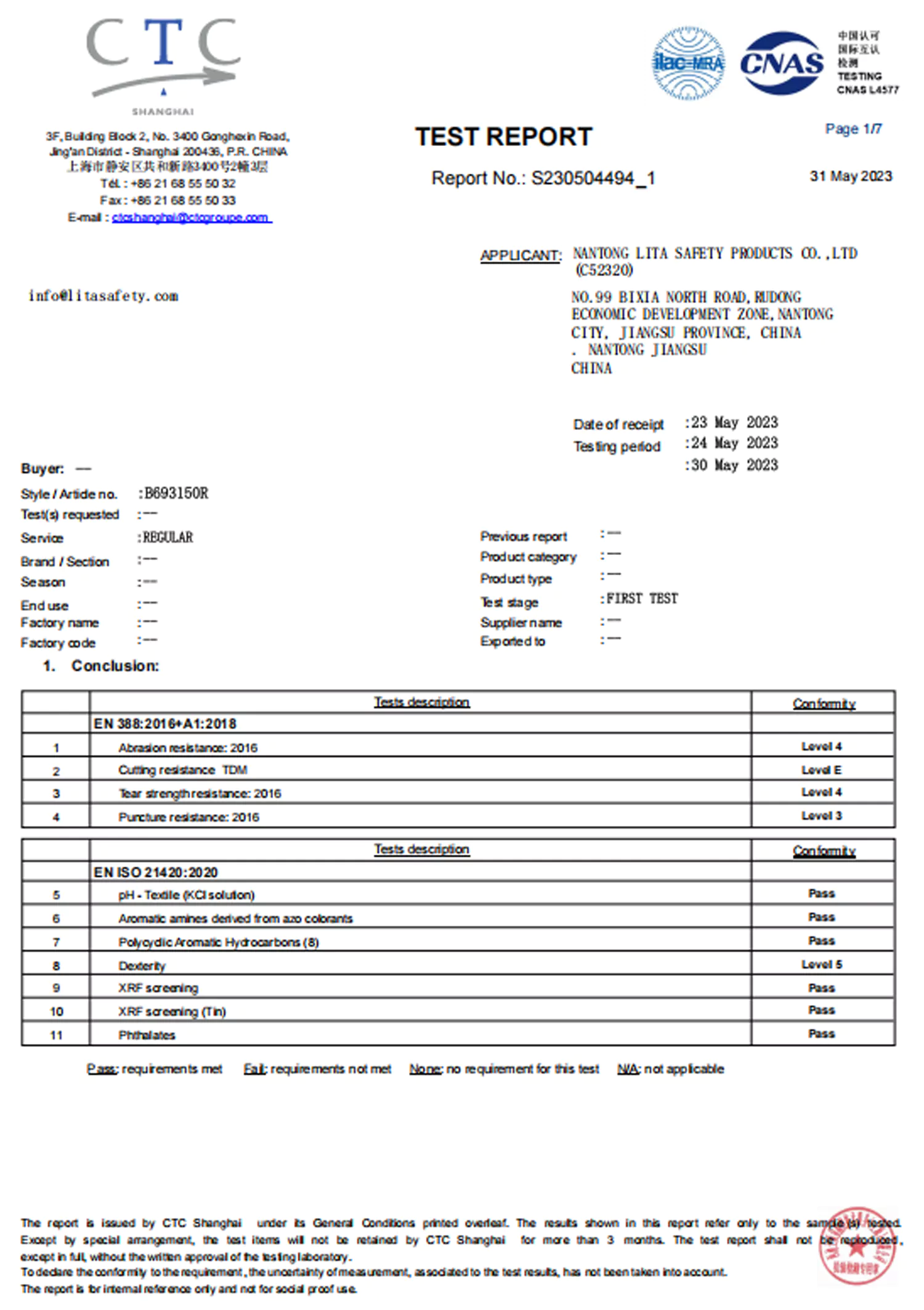
This CTC test report covers LITA Safety glove model B693150R, a double nitrile-coated high-performance protective glove. The tested sample achieved Level 4 abrasion resistance, Level E TDM cut resistance, Level 4 tear resistance, Level 3 puncture resistance, and Level 5 dexterity. The report also records passing results for the listed pH, aromatic amines, PAHs, XRF screening, tin, and phthalate tests.